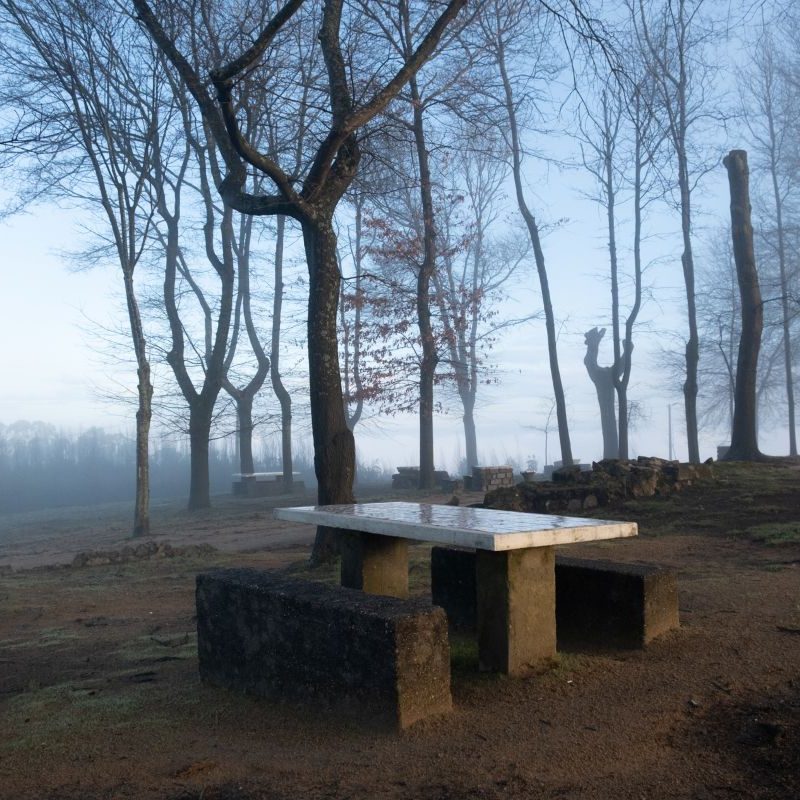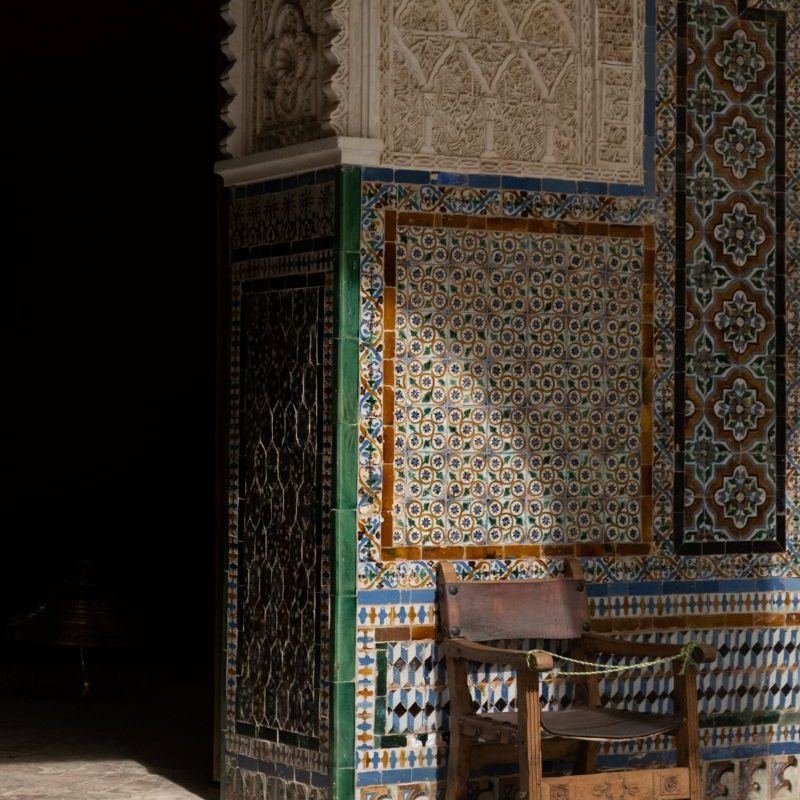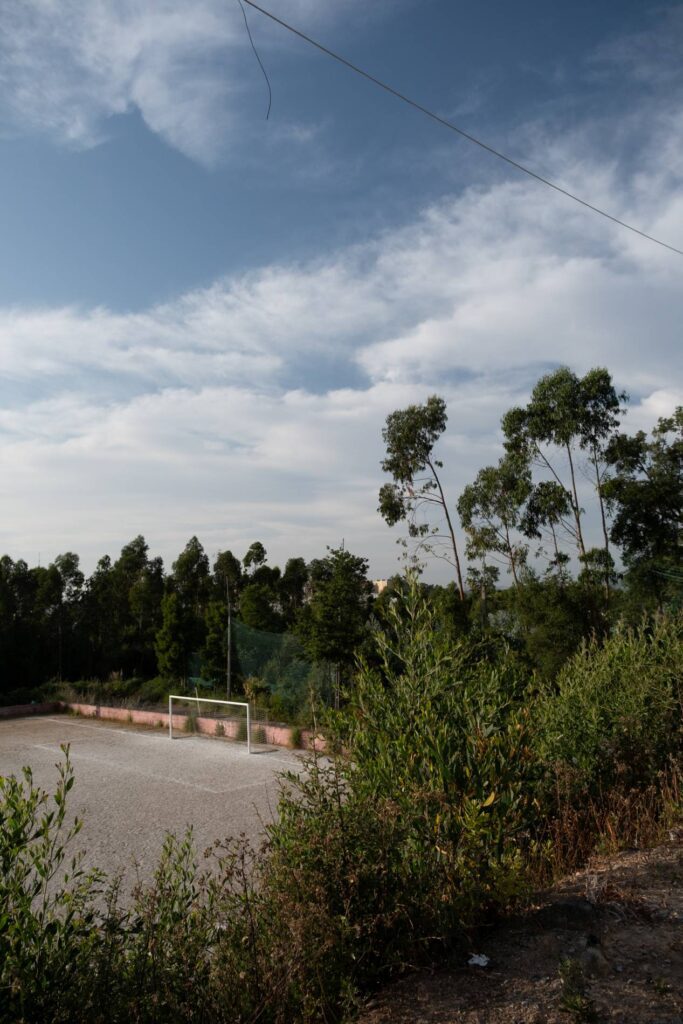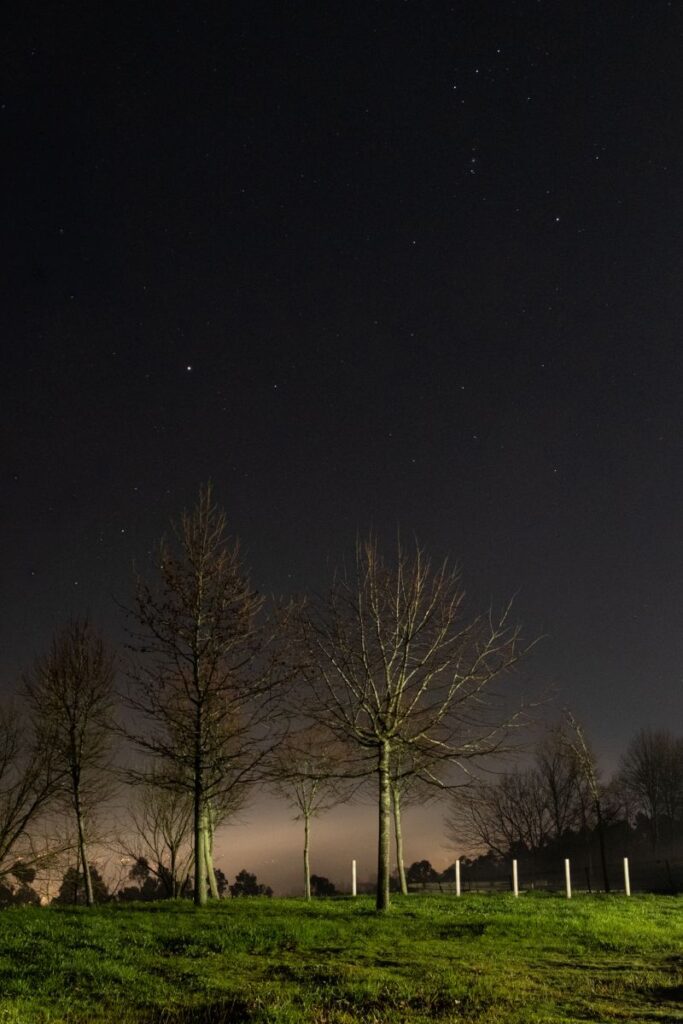
I have a rough mental map of photographs that might belong together.
Some are already in collections. Others are connected only in my head. I remember them when I make something new, or when I return to an older image and notice that it resembles a tendency I have continued elsewhere.
Those connections are not always clear enough to call projects.
I rarely begin with the decision to make one. I don’t usually choose a subject, define its limits, and then go out looking for the photographs that will complete it. Most of the time, the images come first. A single photograph becomes a few related photographs. The group grows slowly, often across different places and periods, until something begins to form.
Or it does not.
That lack of a deterministic approach has shaped most of the work. I tend to wait for the project to reveal itself rather than actively trying to construct one. The advantage is that the connections usually feel organic. The idea comes from the photographs rather than being placed over them too early.
The disadvantage is that I can wait for too long.
Certain spaces, objects, distances, or visual tensions can follow me across years without announcing themselves as a body of work. I may recognise the recurrence, but still hesitate to give it a name. A few photographs can feel related without producing a whole that feels stronger than the individual images.
Sometimes the parts are better than the project I am trying to see in them.
That can mean several things. The photographs may need more time and more variation. A new image may reveal what the others were missing. The group may contain smaller projects that need to be separated. Some photographs may belong elsewhere. Or the relationship may never become more than a loose collection of things I happened to notice repeatedly.
The challenge is knowing which possibility I am looking at.
A stronger sequence can clarify it. Sometimes one photograph changes the balance of everything around it. It creates a beginning, interrupts a repetition, or exposes a connection that had been present but difficult to see. The project suddenly feels less like a group of similar images and more like a structure.
But I have often expected that structure to be too complete before allowing myself to call it a project.
I treat the word as though it should describe something resolved. A finished edit. A stable concept. A sequence with no obvious gaps. Something I could place on the website without needing to explain that it may still change.
That expectation has probably limited the work. That expectation has definitely limited the work, if I’m being completely honest.
Projects do not need to arrive in their final form. They can have versions. A sequence can be accurate for the photographs that exist now and become inaccurate later. Images can leave. Others can enter. The idea can narrow, expand, or divide without making the earlier version false.
I know this in theory, but I have not always worked that way.
Instead, I have often kept the project internal until I felt certain about its shape. The photographs remained as singles or informal groupings because the whole had not reached the level of completion I expected. The mental map continued to grow, but the project itself stayed unnamed.
This is connected to what I wrote in my previous entry (Photographs Without a Project). Some photographs remain hidden because I do not yet know where they belong. But there is another problem underneath that one. Sometimes I know there is a relationship, but I still resist calling it a project because I cannot see its final limits.
I am trying to change that.
The aim is not to manufacture projects from every recurring subject. It is not to force connections or build concepts around photographs that work better alone. It is to become more active in testing what the work might be.
That may mean making photographs with an existing group in mind. Returning to an idea before it has fully defined itself. Trying a sequence that I already expect to change. Allowing a project to exist as a first version rather than waiting for the last one.
There is a difference between letting work mature and waiting for it to become undeniable. The first gives the photographs time; the latter can become a way of avoiding a decision.
I still want projects to emerge from the work rather than from a concept imposed in advance. That part has not changed. But emergence does not have to mean being passive. I can recognise a direction and follow it without pretending to know where it ends. And it can be organic even if I’m more actively searching for it, not only when shooting like I already do, but also in the chopping block.
A project can begin before its boundaries are clear. It can be incomplete without being premature. And it can change without being labeled a failure.
I should probably repeat those things in my head a few times.